The Talatan PV Power Station is a large cluster of solar power stations in the Gonghe County China. The development began in 2011 on the Tibetan Plateau and expanded into one of the largest solar farms in the world.
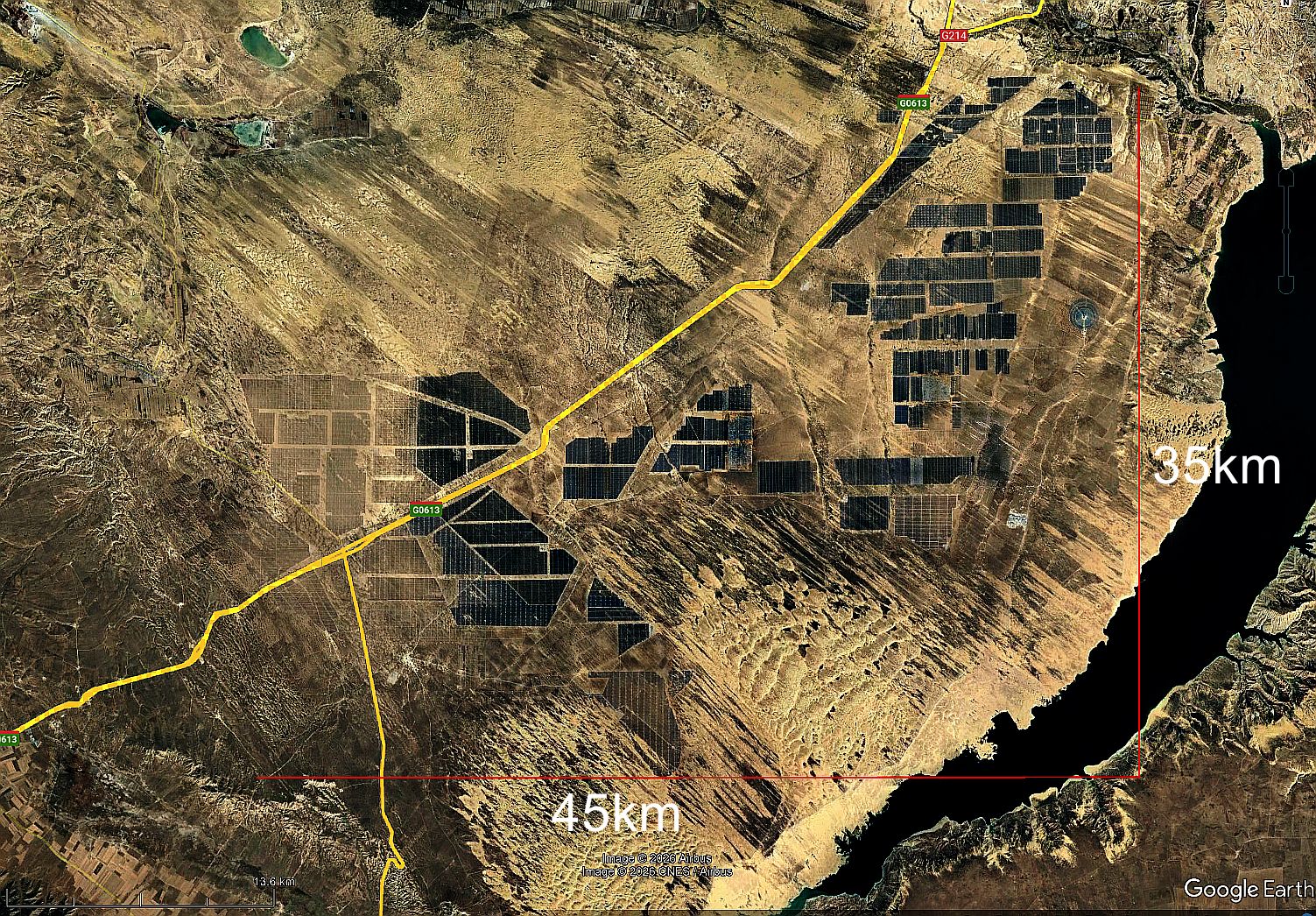
Talatan is not a single plant but a cluster of many projects. The total installed solar power in the Talatan park area had reached approximately 21 GW, with average annual electricity generation of about 18.000 GWh, allowing a reduction of 16 milion tons of CO2 emissions annually.
Over a 20-25 year lifespan, the plant can prevent over 400 milion tons of CO2 from entering the atmosphere. 16 GW of solar can be equivalent to planting over 588 milion trees annually.
Talatan lies in Gonghe County in Qinghai Province, in a high-altitude semi-arid environment characterized by strong solar irradiation, low population density, and extensive areas of desertified land. The region has traditionally been used as sheep grazing lands by Tibetan shepherds. The average altitude here is about 3000 m. The area forms part of the broader solar development zone in the Hainan Tibetan Autonomous Prefecture, which also includes projects near Longyangxia and other sites along the upper Yellow River basin.